



Why Are Ravens Like A Writing Desk?
At first glance, this question sounds like nonsense. That is exactly why it has stayed memorable for so long. People hear it and immediately begin looking for a hidden connection between two things that do not naturally belong together. In a way, classrooms work the same way. A good study space brings together things that seem ordinary on their own, but become much more meaningful when they are used in the right combination. A desk by itself is just a desk. A chair by itself is just a chair. But once they are designed to work together for posture, storage, movement, and daily learning, they become part of a much more useful system.
That is why this strange question can still lead to a practical discussion. In education furniture, the real issue is not only whether a desk looks simple or familiar. It is whether it supports the habits that students repeat every day. A well-designed student table and chair set is not simply classroom equipment. It shapes comfort, order, concentration, and even how easily a classroom can be cleaned and rearranged.
A Writing Desk Is Never Only A Surface
When people think of a writing desk, they often imagine a flat place to read, write, and organize thoughts. In school furniture, that role becomes even more important. Students do not only write. They also read, listen, store materials, shift position, join group work, and stay seated for long periods. That means the desk has to support more than one task at the same time.
This is where the value of a complete study table and chair combination becomes clear. The desktop needs to feel stable and practical. The chair needs to support posture without making movement difficult. The under-desk space or drawer should help students keep books and learning tools in order instead of turning the classroom into a cluttered environment. Once all these parts work together, the furniture begins to support learning rather than simply filling space.
Why Classroom Furniture Has To Work As A System
A writing desk in a private room can be chosen for style. School furniture cannot be selected that way. In a classroom, every unit has to perform under repeated daily use. Students move chairs, lean on desk edges, store books, clean around the furniture, and shift layouts during activities. If the product is not built as a full working system, small problems start showing quickly.
That is why a student table and chair set is more practical than mixing unrelated pieces together. A properly matched set gives the classroom a more consistent height relationship, more balanced proportions, and a cleaner visual order. This matters for schools, training centers, and library spaces where furniture has to look organized while also surviving long-term use.
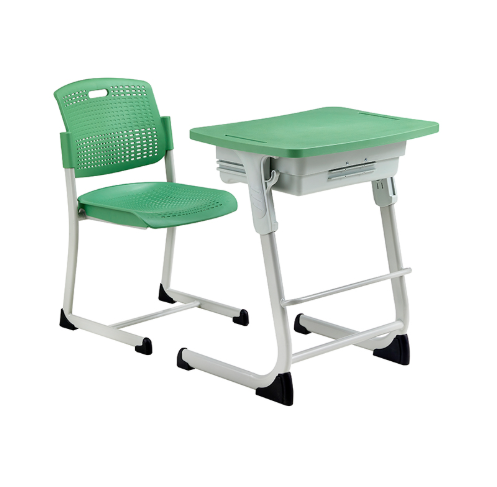
Our study table and chair direction fits this logic naturally. The combination is built around a classroom environment where daily writing, reading, self-study, and interactive learning all happen in the same space. The structure is meant to stay lightweight enough for movement while still feeling stable in use.
Daily Learning Depends On Everyday Comfort
Students rarely notice classroom furniture when it works well. They notice it when it does not. A desk that feels too crowded, a drawer that is difficult to use, or a chair that offers poor support can turn simple classroom time into unnecessary discomfort. Over a few minutes that may seem small. Over a school term, it becomes a real issue.
This is one reason education buyers increasingly focus on comfort together with practicality. The furniture should help students sit with less distraction, store their materials easily, and move with less effort when classroom layouts change. A better-designed set does not make learning happen by itself, but it removes some of the small physical barriers that make classrooms feel less efficient.
The desk-and-chair combination here is useful in that sense because it combines moderate weight with practical classroom proportions. The desktop size supports books and stationery without becoming oversized, while the seating and backrest dimensions are intended to offer everyday support for reading, writing, and participation.
Lightweight Structure Helps Classrooms Stay Flexible
One of the biggest changes in education spaces is that classrooms are no longer arranged for only one teaching style. Teachers now use discussion, group work, quick room changes, and more flexible activity formats. Heavy furniture makes all of this slower. Furniture that is too light can feel unstable. What buyers usually need is a middle ground.
That is where material choice matters. A combination of plastic components and steel framing often gives the classroom a more useful balance. The desk can stay easier to move without feeling temporary, while the frame still provides enough support for long-term use. In practical school settings, this becomes important during cleaning, rearranging, and multi-use teaching situations.
For institutions buying in volume, this kind of flexibility is not a small advantage. It affects labor, classroom turnover, and how easily one product line can work across different teaching spaces.
Storage Is Part Of Classroom Order
A writing desk is closely linked to organization. In school environments, this is even more obvious. Students carry books, notebooks, stationery, and personal items every day. If there is no proper storage built into the desk, the surface becomes messy very quickly, and the classroom loses order.
That is why drawers matter more than they first appear. A drawer is not just an accessory. It helps students manage their own materials and keeps the desktop clearer for active learning. In real use, this has an effect on both concentration and classroom appearance.
The study table and chair combination here includes a PP drawer with adjustable height options, which makes it more useful across different school stages and storage needs. For schools and training institutions, this helps the same product direction serve more than one age group or teaching format.
Easy Cleaning Is A Real Buying Decision
In school projects, easy cleaning is not a bonus feature. It is part of the real value of the furniture. Classrooms collect dust, pen marks, paper residue, and daily contact from many users. A desk that is difficult to wipe down becomes more expensive to manage over time.
That is one reason smooth plastic desk surfaces remain attractive in education furniture. They can be cleaned quickly, and they tend to handle routine school maintenance better than more delicate surfaces. The same is true for seating materials that resist common classroom stains and regular cleaning agents.
For B-end buyers, especially schools, education contractors, and distributors, this is one of the most practical factors in the purchasing decision. A product that looks acceptable but is slow to maintain often creates a hidden cost after installation.
Quiet Operation Is More Important Than It Sounds
Noise in a classroom rarely comes from one big source. It usually comes from many small things happening all day. Chairs scraping, desks shifting, and furniture being moved for cleaning or activities all contribute to the sound level in the room. Over time, that affects the learning environment more than many people expect.
This is why foot design matters. A desk and chair set that moves with less scraping noise supports a calmer classroom atmosphere. It also reduces unnecessary disturbance during layout changes, especially in reading rooms, exam spaces, and study areas.
The table and chair direction here includes bottom feet designed to improve friction and reduce movement noise, which is useful in classrooms, tutoring centers, and library-style learning environments where quiet operation matters.
Why B-End Buyers Think Beyond One Classroom
A school or training institution rarely buys furniture for only one room. The decision is usually connected to larger planning. Buyers think about whether the same model can be used across multiple classrooms, whether the design works for different grades, and whether the product can hold up through repeated long-term use.
That is why standardization and supply consistency matter so much. The furniture should not only look correct in one sample. It should remain reliable when delivered in larger volumes and used in rotation across different spaces. The product information here clearly supports bulk purchasing for schools, institutions, and government projects, while also allowing changes in appearance, color, and drawer height to suit different planning needs.
For buyers working on broader education projects, that type of flexibility is where supplier support becomes important. OEM or ODM capability is not always about dramatic redesign. Sometimes it is about small but useful adjustments that make the furniture fit a particular campus plan or market requirement better.
A Better Writing Desk Means A Better Learning Environment
In the end, the old riddle works because it makes people stop and think about ordinary objects in a different way. A writing desk seems simple until you look more closely. Classroom furniture is the same. It may appear basic from a distance, but in actual use it affects order, comfort, flexibility, and the overall rhythm of learning.
That is why education furniture should be chosen with more care than people sometimes expect. A well-matched desk and chair set supports more than sitting and writing. It helps classrooms stay quieter, cleaner, more flexible, and easier to manage over time. For schools and institutions, those practical gains matter much more than decorative features.
Conclusion
So, why are ravens like a writing desk? The real answer may still belong to literature, but the question is a useful reminder that everyday objects often matter more than they first appear. In classrooms, a writing desk is never just a surface. It is part of how students learn, organize, move, and stay focused throughout the day.
If you are sourcing a student table and chair set for classrooms, training centers, libraries, or larger education projects, we can help you review sizes, materials, bulk supply options, and OEM or ODM requirements. Share your project plan with us, and we can help you build a classroom furniture solution that is more practical for daily learning and easier to manage over time.
Previous: