
What Commercial Chairs for Waiting Rooms Offer Easy Replacement of Worn Parts for Facility Managers?
Facility managers do not replace Waiting Room Chairs only because the whole chair fails. In many public spaces, one damaged armrest, one loose connector, one worn seat surface, or one bent leg can make the chair unsuitable for daily use. If the damaged part cannot be replaced separately, the buyer may have to scrap the full chair even when most of the structure is still usable.
For airports, hospitals, banks, schools, office reception areas, and public service halls, commercial chairs for waiting rooms should be evaluated by long-term maintenance logic. A chair may look stable on the first day, but facility teams care more about what happens after months of traffic, cleaning, impact, and repeated use.
Maintenance Cost Usually Comes From Small Damage
One Broken Part Should Not End The Whole Chair
In high-traffic waiting areas, the most common problems are often local damage. Armrests may get scratched. Seat surfaces may wear. Bolts may loosen. Beam connections may need checking. If the chair is built as one hard-to-service unit, maintenance teams have fewer choices.
A better Waiting Chair structure should allow staff to identify the damaged area and handle it without removing the entire row from service. This helps public venues reduce furniture waste and avoid unnecessary replacement spending.
Facility Teams Need Faster Repair Decisions
When a chair breaks in a waiting area, staff need to act quickly. Leaving damaged seating in place affects visitor experience and safety. Removing too many chairs reduces seating capacity.
For facility managers, easy maintenance is not only about saving money. It also helps keep the waiting area open, clean, and organized during daily operation.
Modular Structure Makes Long-Term Use More Practical
Bolted Parts Are Easier To Manage
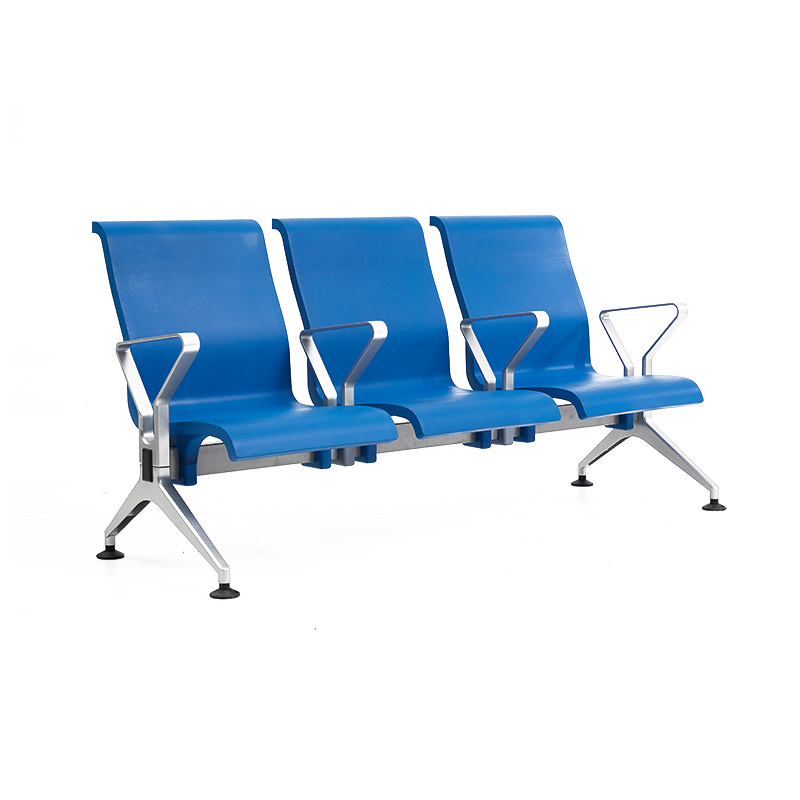
Our commercial waiting chair uses a PU-wrapped steel frame, aluminum armrests and legs, and a metal tube beam structure. This type of construction gives buyers a clearer way to separate key chair parts during inspection and maintenance.
The chair also uses a modular installation direction with bolt connections. For project buyers, this matters because maintenance teams can check fixing points, tighten loose areas, and handle specific components more easily than with fully fixed one-piece seating.
Beam Seating Needs Clear Part Control
Waiting room chairs are often supplied in 1–5 seat configurations. In public spaces, multi-seat rows are efficient, but they also need better maintenance planning. If one position is damaged, the facility team should not need to discard the entire beam seating row too quickly.
Before bulk ordering, buyers should ask how seats, armrests, legs, beams, and fixing accessories are handled for later service. This small step can reduce future maintenance pressure.
Surface Wear Should Be Planned Before Handover
PU Seating Needs Easy Cleaning And Repair Thinking
Waiting areas face coffee spills, dust, clothing friction, bags, children’s movement, and daily cleaning. PU seating is practical because it can be wiped more easily than many fabric surfaces. But buyers still need to plan what happens when the surface becomes worn or damaged.
A chair for public use should not depend only on appearance at installation. It should support routine cleaning and reasonable part replacement planning after repeated use.
Cleaning Teams Should Not Damage The Chair Faster
Some furniture fails early because cleaning methods are too harsh. Strong chemicals, rough tools, or repeated dragging can damage the surface or connection points.
For Commercial chairs for Waiting rooms, buyers should prepare basic maintenance guidance for cleaning teams. Clear cleaning rules help protect the chair surface and reduce preventable damage.
Public Spaces Need Spare Part Thinking
Airports And Hospitals Cannot Wait For Long Repairs
In airports and hospitals, seating is not decorative. It is part of visitor flow. A damaged chair row can affect passenger waiting, patient comfort, and space management.
For these projects, buyers should confirm whether spare parts such as armrests, legs, bolts, and support elements can be prepared with the original order. Having replacement parts available can prevent long downtime.
Banks And Offices Need A Consistent Look
In banks, office reception rooms, and service halls, mismatched replacement furniture can make the area look poorly managed. If one chair is replaced with a different model or color, the whole row may look inconsistent.
A stable chair model with replaceable parts helps facility managers maintain the same visual standard without replacing all seating at once.
Packing And Installation Affect Future Maintenance
Parts Should Arrive Organized
For project orders, packaging should protect chair surfaces and also keep components easy to identify. If screws, armrests, legs, or support parts are mixed or damaged during shipment, installation becomes slower and future maintenance becomes harder.
Well-organized packing helps installers work faster and gives facility teams a clearer understanding of the chair structure from the beginning.
Installation Records Help Later Repairs
When waiting chairs are installed across several floors or public zones, facility teams should keep a simple record: model, seat configuration, color, location, installation date, and spare part plan.
This makes later maintenance easier. Staff can know which part is needed instead of guessing from the damaged chair alone.
Keep More Chairs In Service Instead Of Replacing Full Rows
The best waiting room chair for facility managers is not only the one that looks modern on delivery. It is the one that can stay in service longer because damaged parts are easier to inspect, tighten, replace, or maintain.
For airports, hospitals, banks, schools, hotel lobbies, and office reception areas, Commercial chairs for Waiting rooms should be selected with replacement planning in mind. Seat surfaces, armrests, legs, beams, bolts, cleaning needs, and spare parts all affect the true maintenance cost.
If your project needs Commercial Waiting Chairs with a structure that is easier to install, manage, and maintain over time, come to us to prepare this seating plan properly. Send the waiting area size, expected traffic level, seat quantity, color direction, spare part needs, packing requirement, and order schedule. Our team can help match waiting chair options that reduce unnecessary full-chair replacement and keep public seating areas easier to manage.