


What Are The Two Types Of Chairs?
There is no single universal rule that divides every chair into only two categories. For public seating, however, Waiting Chairs can be practically grouped into two broad types: individual seating and connected multi-seat seating. Understanding these two types of waiting chairs helps determine which arrangement works better for reception rooms, hospitals, airports, stations, and other shared spaces.
For project purchasing, the distinction also affects floor utilization, cleaning, installation, transportation, and order configuration. A waiting chair wholesale supplier therefore needs more information than the number of chairs required; the intended space and seating arrangement are equally important.
Individual Chairs: Flexible and Easy to Rearrange
Individual chairs are independent seats that can be moved and repositioned separately. Waiting Room Armchairs, visitor chairs, reception chairs, and lounge-style chairs all fit this general category.
Their greatest advantage is flexibility. A reception area can add, remove, or rearrange seats according to changing needs. Individual chairs are particularly practical where the space is small or where the furniture layout may change frequently.
They also create a less institutional appearance. In an office lobby, clinic reception area, hotel lounge, or private waiting space, separate chairs can make the environment feel more relaxed.
However, individual waiting chairs can move out of alignment during busy periods. More floor space may also be required because gaps naturally develop between chairs.
Buyers considering this type can explore our broader waiting chair collection, which includes different configurations for public and commercial environments.
Connected Waiting Chairs: Designed for Organized Seating
The second major type is connected or beam-mounted seating. Two, three, four, or more seats are fixed to a shared support structure.
This design is widely used in airports, hospitals, stations, government service halls, and other areas where many people need to sit within a controlled footprint.
Connected seating offers several practical benefits:
Seats remain in a consistent position.
Rows are easier to organize.
Floor space can be used efficiently.
Users have clearly defined seating positions.
Multi-seat units are less likely to be moved by visitors.
Cleaning teams can maintain a predictable furniture layout.
Our product range includes 1-to-5-seat configurations in several waiting-chair series, allowing the number of seats to be matched to the available area.
Which Type Works Better?
Neither type is automatically better. The right decision depends on how the space operates.
A small office reception room may benefit from movable individual chairs. A busy hospital corridor may need fixed rows that remain stable throughout the day. An airport gate usually requires large quantities of organized seating, while an executive waiting lounge may prioritize individual comfort.
Traffic volume matters as well. High-frequency public seating should be evaluated for frame stability, seat material, armrest construction, cleaning access, and maintenance requirements.
That is why choosing between the two types of waiting chairs should begin with the environment rather than appearance alone.
How Manufacturing Relates to Public Seating
Our factory has been producing furniture since 2013 and has a production base of more than 50,000 square meters. The manufacturing system covers metal stamping, robot welding, hardware spraying, packaging, PU production, and related furniture processes.
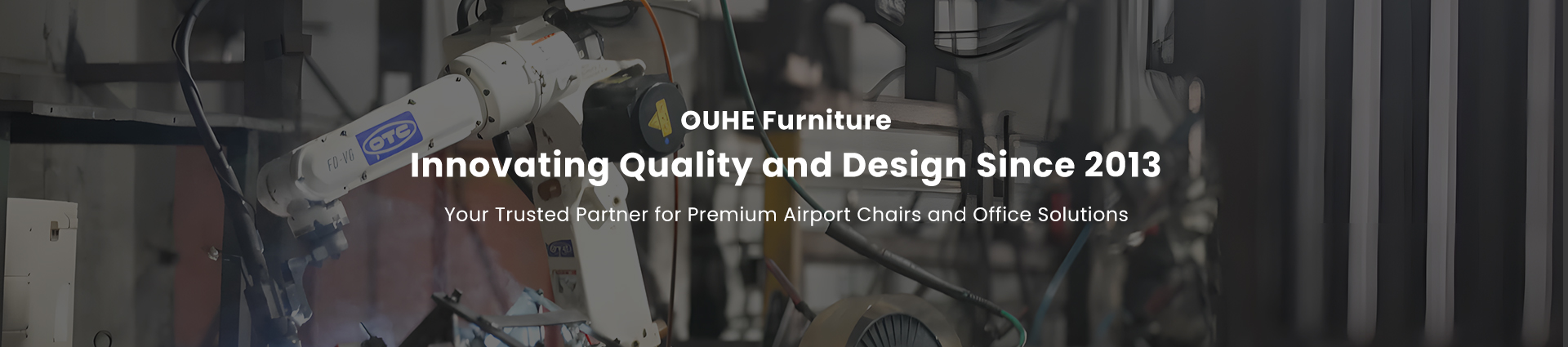
Automatic robotic welding is used for our waiting-chair products to improve welding consistency and production efficiency. This becomes especially relevant when many connected waiting chairs need to maintain the same structure and appearance across one project.
As a waiting chair wholesale supplier, we can also review seating quantity, material, color, seat configuration, and application before an order is finalized.
A Simple Way to Decide
Choose individual seating when flexibility, visual softness, and easy rearrangement are priorities.
Choose connected seating when capacity, orderly layouts, stability, and efficient use of public space matter more.
Many large facilities actually use both. Connected seats may be placed in high-traffic zones, while individual chairs are used in reception or lounge areas.
Get the Right Waiting Chair Configuration
Not sure whether single chairs or connected seating better suits your project? Send us your waiting-area size and seating requirements. Share the application, required seat quantity, preferred material, color, and configuration, and we can help evaluate suitable waiting chairs for the space.