


What Is The Average Lifespan Of A Waiting Chair?
The average lifespan of a Waiting Chair cannot be reduced to one fixed number. A well-built waiting chair may remain functional for many years, while a poorly matched chair can develop loose joints, worn surfaces, damaged cushions, or unstable components much sooner. Usage frequency, material, structure, cleaning, environment, and maintenance all influence service life.
For airports, hospitals, stations, and busy reception facilities, this makes a heavy duty commercial waiting chair more relevant than simply looking for a chair advertised as durable.
What Determines Waiting Chair Lifespan?
The first factor is the structural frame.
Every time someone sits down or stands up, force is transferred through the seat, beam, arms, legs, and connecting points. A public chair may experience this cycle hundreds of times more frequently than residential furniture.
Stable metal construction and consistent welded joints therefore contribute to longer-term performance.
The second factor is surface material. Painted steel, stainless steel, PU, and other seating surfaces have different wear characteristics. Selection should reflect the intended environment.
A chair placed in a quiet corporate reception area does not experience the same conditions as seating beside an airport boarding gate.
Usage Frequency Matters More Than Calendar Age
Two identical waiting chairs installed on the same day can age very differently.
One may be used by 20 people per day. Another may be used continuously from morning until night. Calendar age alone does not describe the real workload.
High-traffic locations introduce repeated:
Sitting and standing loads
Sideways movement
Contact with luggage
Cleaning cycles
Surface abrasion
Accidental impacts
Stress on armrests
This is why public seating should be selected around usage intensity rather than only its purchase price.
Our airport waiting chairs are designed around the organized, high-frequency seating requirements found in transport environments.
Can a Waiting Chair Last 10 Years?
It is possible for appropriately designed commercial seating to provide long service, but no manufacturer should treat one lifespan number as universal for every model and environment.
For example, one of our steel waiting lounge chair series is designed for intensive public use and is specified with a service-life target exceeding ten years under its stated design and test conditions. That figure should not automatically be applied to every waiting chair.
Actual longevity still depends on correct installation, user behavior, maintenance, environmental exposure, and whether the chair was properly specified for the location.
A heavy duty commercial waiting chair used within its intended conditions will generally provide a better basis for long-term operation than lightweight furniture placed in a high-traffic public hall.
How Robotic Welding Supports Structural Consistency
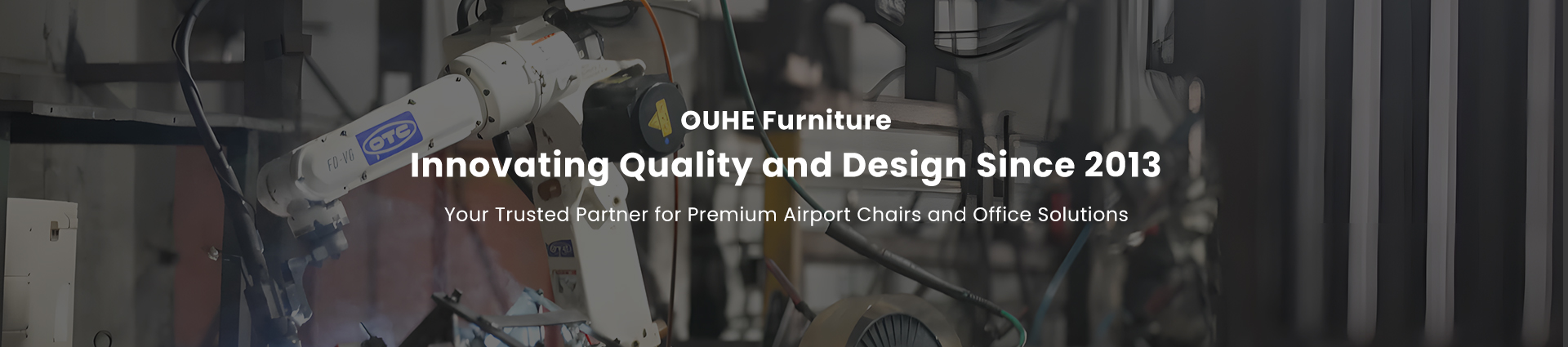
Our waiting-chair production uses automatic robot welding.
A public seating order may contain dozens or hundreds of units, so the consistency of welded connections matters as much as the strength of one sample. Robotic welding helps control repeated welding operations and reduces variation between units.
Our production system also includes metal stamping, hardware spraying, PU manufacturing, packaging, and shipment preparation. These processes allow structural and surface requirements to be considered within the same production chain.
Buyers can explore stainless steel waiting room chairs when easy cleaning and metal seating construction are priorities.
Maintenance Can Extend Practical Service Life
Even durable public seating requires inspection.
Loose fasteners should be tightened before movement damages surrounding holes. Damaged foot pads should be replaced. Painted surfaces should be inspected for impact damage, especially where exposed metal could begin to corrode.
PU cushions should be checked for cuts or separation. Cleaning products should also be compatible with the chair surface.
Small maintenance tasks performed early can prevent minor issues from becoming structural or cosmetic failures.
When Should Waiting Chairs Be Replaced?
Replacement should be considered when a chair becomes unstable, structural components are damaged, seats cannot be securely fixed, or surfaces can no longer be maintained appropriately.
Visual aging alone does not always mean the structure has reached the end of its useful life. Likewise, a chair can still look acceptable while hidden fasteners or joints require attention.
Therefore, the real average lifespan of a waiting chair is determined by both physical condition and operating requirements.
Ask About Long-Life Waiting Chair Options
Need seating for an area with continuous daily use? Send us your application and expected seating volume. Tell us whether the chairs will be used in an airport, hospital, station, office, or other location, and we can discuss suitable waiting chair structures, materials, configurations, and quantities.