


Custom Airport Seating vs. Standard Models: Which Suits Your Project Best?
Custom airport seating is worth considering when a project has specific layout, branding, or performance requirements. Standard models are often the practical choice when proven dimensions, straightforward procurement, and predictable delivery matter more than design changes.
What Is the Difference Between Custom and Standard Airport Seating?
Standard airport seating uses an existing product design with established dimensions, materials, and structural configurations. Buyers can select a suitable model and confirm its specifications before ordering, which generally simplifies the quotation and approval process.
Custom airport seating starts with a standard model or a project-specific design brief. Depending on manufacturing capabilities, the buyer may request changes to seat materials, colors, beam configurations, dimensions, armrests, or other components.
Neither approach is automatically better. The right choice depends on how closely an existing product matches the installation requirements.
For example, a contractor furnishing a conventional departure lounge may find that standard airport terminal chairs meet the project's requirements. A premium terminal renovation with a specific color scheme or unusual floor layout may benefit from a customized configuration.
The important distinction is between selecting an existing solution and developing one around the project's requirements.
When Should Buyers Choose Standard Airport Chairs?
Standard models are often a sensible starting point for projects with straightforward seating requirements.
They offer several practical advantages for importers, distributors, and contractors.
Simpler product evaluation: Buyers can review existing dimensions, materials, and configurations before requesting samples.
Fewer design decisions: An established model reduces the number of details that need to be developed and approved from scratch.
Easier repeat purchasing: A documented product specification makes it easier to reorder the same model for additional locations or later project phases.
More predictable procurement: Existing products may avoid some of the development steps associated with custom designs, although actual production and delivery times still depend on order volume and factory scheduling.
Standard seating can also provide a useful reference when a project requires several different configurations. A buyer might use three-seat units in smaller waiting areas and longer rows in open terminal spaces, provided the selected models fit the floor plan.
Before placing a bulk order, confirm the actual seat dimensions, total row length, beam structure, mounting arrangement, and available finishes.
OUHE's guide to standard airport chair dimensions explains why individual seat measurements and the footprint of a complete seating row should be considered separately.
When Is Custom Airport Seating Worth the Extra Development?
Customization becomes useful when an existing model cannot meet an important project requirement.
A common example is a terminal with fixed columns, narrow circulation routes, or existing floor anchors. The standard chair may have the right appearance but the wrong overall length or mounting position.
Other reasons to consider customization include:
Matching a specific architectural color scheme.
Selecting PU seating with a particular color or surface appearance.
Adjusting seat quantities or beam configurations.
Coordinating armrests and support structures with the interior design.
Meeting project-specific dimensional requirements.
Developing a consistent seating appearance across different terminal zones.
For buyers seeking a combination of PU seating and metal construction, OUHE's custom PU and metal airport chairs provide a reference for evaluating the available design direction.
However, customization should have a clear purpose. Changing a component simply because customization is available may add cost and approval work without improving the finished installation.
The best starting point is to identify the specific problem that an existing model cannot solve.
Which Materials Should Be Considered for an Airport Seating Project?
Material selection affects comfort, cleaning, appearance, corrosion resistance, and maintenance.
| Material or Structure | Advantages | What Buyers Should Check |
|---|---|---|
| PU seating with a metal frame | Cushioned seating with a structured support system | PU quality, internal frame construction, surface cleaning requirements |
| Stainless steel seating | Firm seating surface and convenient wipe-down | Steel grade, finish, corrosion exposure, and user comfort |
| Painted steel seating | Practical for coordinated colors and large installations | Coating quality, surface preparation, and scratch resistance |
| Upholstered seating | Soft feel and a wider range of textures | Fabric durability, stain removal, seams, and replacement options |
The choice should reflect the location and expected use. A busy boarding area may prioritize straightforward cleaning and structural durability, while a premium lounge may place greater emphasis on cushioning and appearance.
OUHE discusses these trade-offs in its article on airport chair material characteristics.
For project procurement, specify the materials of the individual components rather than relying on a general description such as metal chair or PU chair.
How Do Custom Designs Affect Quality Control?
A custom design needs a clear approval process because even small changes can affect fitment and consistency.
Changing the seat width may alter the overall row length. Changing a beam profile may affect structural behavior. Selecting a new PU color or finish may introduce additional production checks.
Before mass production, buyers should approve a sample or technical drawing that records the key specifications.
The review should cover:
Seat width, height, depth, and backrest dimensions.
Total row length and number of seats.
Frame and beam materials.
Armrest design and position.
Surface finish and color.
Mounting holes and floor-fixing requirements.
Packaging dimensions and protection.
Required product testing and acceptance criteria.
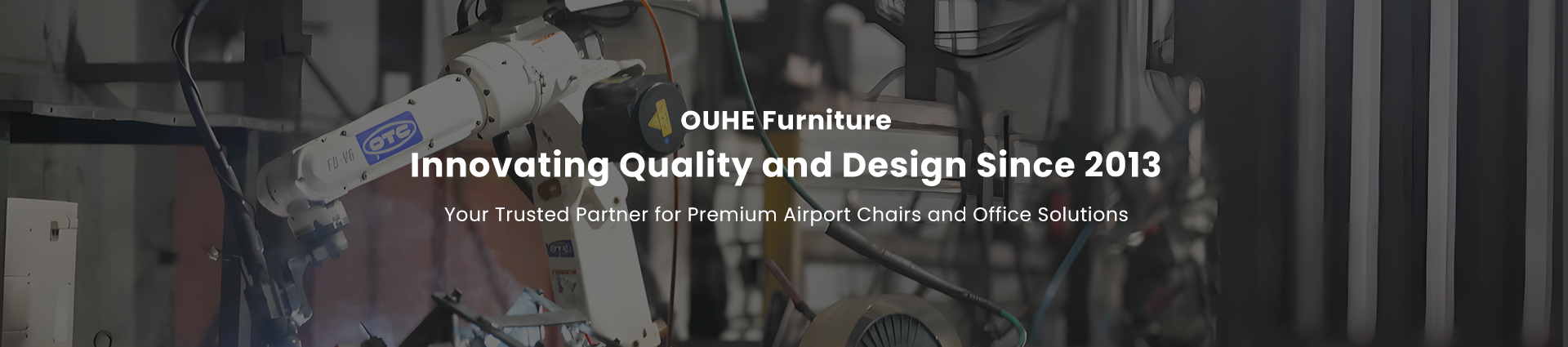
Manufacturing precision is equally important. OUHE's production system includes metal stamping, robotic welding, surface spraying, PU production, and packaging facilities. Its article on how airport waiting chairs are manufactured explains how these processes contribute to repeatable production.
Buyers should also distinguish factory management certifications from product-specific compliance. Any required structural, fire-performance, accessibility, or other documentation should be confirmed for the actual project and destination market.
How Should Airport Contractors Compare Total Project Cost?
The purchase price is only one part of the budget.
A standard chair with the wrong dimensions may require layout changes or create installation problems. A custom chair may fit the space better but require additional development, sampling, or testing.
Project buyers should compare the complete cost, including:
Unit price and order quantity.
Customization and sample charges.
Installation hardware and labor.
Packaging and shipping volume.
Cleaning and maintenance requirements.
Spare parts and replacement arrangements.
Potential costs associated with specification changes.
A practical approach is to request a quotation for the closest standard model first. If it does not meet the project's requirements, identify the specific changes needed and ask the supplier to price the revised configuration.
This creates a clearer basis for deciding whether customization offers enough value.
Work With OUHE on Your Airport Seating Project
OUHE manufactures airport Waiting Chairs in different materials and configurations for commercial furniture buyers, contractors, and distributors.
To evaluate a suitable option, provide the floor plan, required seat quantity, dimensions, preferred materials, color requirements, installation details, and project schedule. The team can then review whether an existing model is appropriate or whether customization should be considered.
Start with the OUHE airport seating product range and share your project requirements before confirming the final specification.