


What Types Of Public Seats Are There?
Public seating can be classified into connected beam seating, individual chairs, standalone benches, lounge seating, and modular Sofa systems. Each format serves different space-planning, capacity, and user-comfort requirements.
1. Connected Beam Seating: When Several People Need Organized Rows
Beam seating connects multiple seat units through a shared horizontal supporting structure.
Instead of positioning every chair independently, several seats are installed along one beam with supporting legs.
This arrangement is common in airports, railway stations, hospitals, and public service halls.
Its main advantages include:
Consistent seat alignment.
Organized seating rows.
Efficient floor-space planning.
Different seat-count configurations.
Coordinated installation across large areas.
Some commercial beam seating systems are available in configurations ranging from one to five seats.
At our factory, airport Waiting Chairs use combinations of steel frames, PU seating, aluminum components, and metal beams.
The exact construction depends on the selected model.
2. Individual Waiting Chairs: When Layout Flexibility Matters
Individual waiting chairs are separate units that can be positioned independently.
They are useful in smaller reception areas, consultation rooms, office waiting zones, and premium service environments.
Unlike connected seating, individual chairs can be rearranged when the room layout changes.
They also allow project planners to create different seating arrangements without redesigning an entire row.
However, independent chairs may require more attention to floor positioning and spacing.
3. Public Benches: When Simple Seating Is the Priority
Public benches provide a straightforward seating format.
They can be manufactured with metal, wood, or other suitable materials depending on the intended environment.
Benches are commonly considered for corridors, outdoor waiting areas, shopping centers, and shared facilities.
The main design considerations include:
Seat length.
Supporting legs.
Surface treatment.
Edge finishing.
Installation method.
Cleaning and maintenance.
A bench should be evaluated according to its actual installation environment, especially where moisture or outdoor exposure is involved.
4. Lounge Chairs and Sofas: When Comfort Becomes More Important
Lounge chairs and sofas are generally used in environments where visitors may stay for longer periods.
Typical applications include:
Hotel lobbies.
Executive reception areas.
Business lounges.
Office reception rooms.
Premium healthcare waiting areas.
Compared with connected beam seating, lounge furniture usually occupies more floor space per person.
However, it can create a more relaxed atmosphere and provide a different level of seating comfort.
5. Modular Seating: When Layouts Need to Change
Modular seating uses separate furniture sections that can be combined into different arrangements.
Depending on the product design, configurations may include straight seating, corner combinations, chaise sections, or larger lounge arrangements.
This format is useful for spaces that need to accommodate different group sizes or change their layout periodically.
For commercial buyers, the connection method, individual module dimensions, and replacement availability should be confirmed before purchasing.
Which Public Seating Format Fits Different Spaces?
| Seating Format | Typical Environment | Main Planning Advantage |
|---|---|---|
| Beam Seating | Airports and stations | Organized multi-seat rows |
| Individual Chairs | Offices and reception rooms | Flexible positioning |
| Public Benches | Corridors and shared areas | Simple seating arrangement |
| Lounge Chairs and Sofas | Hotels and premium waiting areas | Greater relaxation and visual appeal |
| Modular Seating | Commercial lounges and reception spaces | Flexible configurations |
What Should Furniture Buyers Consider Beyond the Seating Type?
The seating format is only the starting point.
A connected chair may save layout space, but its beam length and installation position must match the project.
An individual chair may offer more flexibility, but it can make large seating areas harder to organize.
A sofa may improve the appearance of a hospitality space, but its footprint and cleaning requirements should also be considered.
For bulk purchasing, buyers should confirm:
Overall dimensions.
Seat and backrest materials.
Frame and leg construction.
Armrest configuration.
Available colors.
Installation requirements.
Packaging specifications.
Spare parts and maintenance arrangements.
How Does Our Manufacturing Range Cover Different Seating Formats?
OUHE manufactures waiting chairs and sofas for different commercial environments.
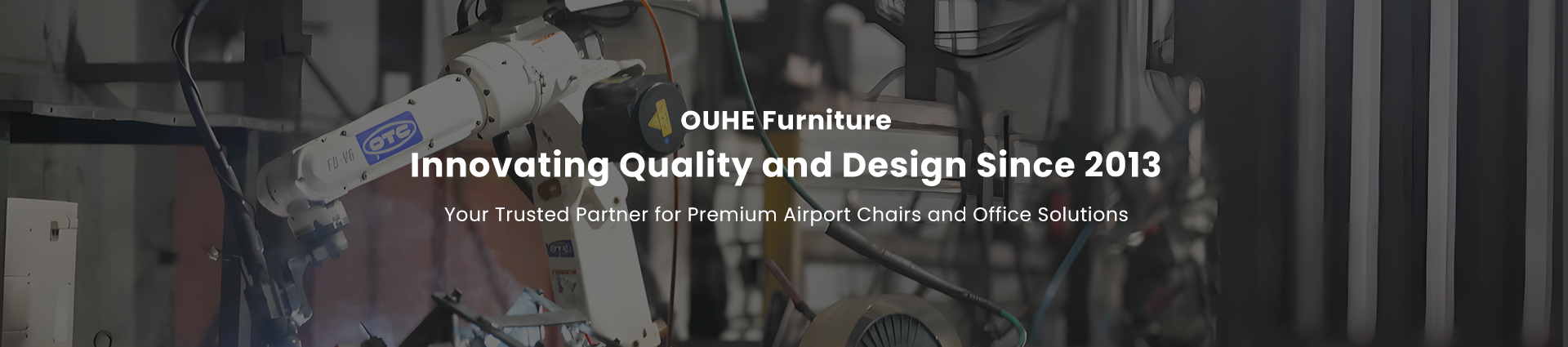
Our waiting chair production uses automatic robotic welding, with 40 Japan OTC robotic welding machines supporting consistent frame production.
Our sofa factory also handles product development and manufacturing, allowing our team to work on different commercial sofa and lounge furniture requirements.
For customized projects, we can discuss seat quantities, frame structures, upholstery options, colors, and dimensions.
Specify the Right Public Seating Format
The most suitable public seating depends on how people use the space, how long they stay, and how the furniture will be maintained.
Request a Public Seating Product Proposal
Share your facility type, preferred seating arrangement, installation dimensions, and estimated quantity to discuss suitable commercial seating solutions.