


Beam Seating vs. Individual Chairs: Which Works Better in Waiting Areas?
Beam seating works better in high-traffic waiting areas that require fixed alignment, predictable capacity, efficient cleaning, and reduced furniture movement. Individual chairs work better in smaller or frequently changing spaces where planners need flexible arrangements and a less institutional atmosphere.
The choice between beam seating and individual Waiting Chairs should begin with how people move through the space. Airports, hospitals, clinics, offices, and public service centers have different circulation patterns and waiting times.
Why Beam Seating Creates Order
Several seats share one beam and leg system, creating a stable row. Users can move through the waiting area without pushing individual chairs into aisles or doorways.
This structure provides practical advantages:
Seating capacity is easier to count.
Rows remain visually consistent.
Floor cleaning is less obstructed.
Chairs are more difficult to relocate without authorization.
Seat spacing remains controlled.
Components can be standardized across a project.
Beam seating is particularly useful near boarding gates, registration counters, ticketing areas, and service queues.
Where Individual Chairs Perform Better
Individual chairs can be rearranged as visitor demand changes. A clinic may separate chairs for privacy, while a hotel lobby may group them around small tables.
Loose seating can also create a more domestic appearance, which may reduce the institutional feeling of a reception area. Individual armchairs are suitable for quieter zones, consultation spaces, executive waiting rooms, and small offices.
Their flexibility creates additional management work. Staff may need to return moved chairs to the correct location, keep circulation routes clear, and inspect more floor-contact points.
Compare the Full Space Cost
Unit price alone does not show which option is more economical. Calculate:
Floor area used per seated person
Aisle and circulation space
Installation labor
Cleaning time
Repositioning labor
Replacement frequency
Spare-component availability
Packaging and freight volume
Future layout changes
Connected seating often uses floor space efficiently, but an overly long row can obstruct movement. Shorter modules can be easier to position around columns, doors, and irregular walls.
Comfort Depends on Seat Design
Beam seating does not have to be uncomfortable, and an individual chair is not automatically ergonomic. Seat height, depth, width, back angle, edge shape, armrest position, and cushion behavior determine the actual experience.
A waiting area bench chair should be tested with the expected user population. Hospitals may need easier sit-to-stand movement, while airport lounges may prioritize longer-duration support.
Maintenance and Component Replacement
A damaged individual chair can be removed immediately, but the space temporarily loses one seat. With well-designed beam seating, one seat, armrest, or surface panel may be replaced while most of the frame remains in service.
Procurement teams should confirm whether replacement seats, legs, arms, beams, fasteners, and leveling feet remain available after the original order.
Our Commercial Seating Production
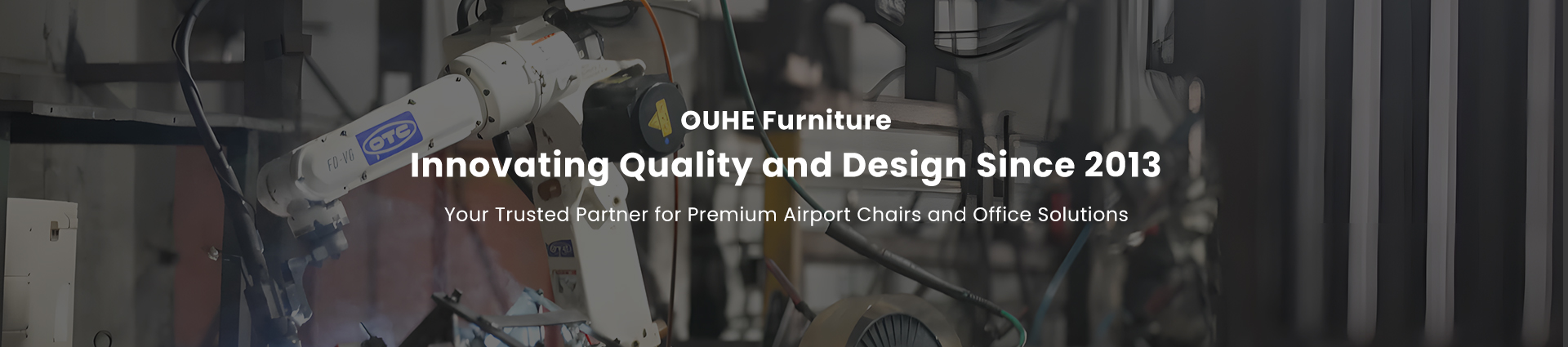
Our factory produces iron, stainless steel, and PU airport seating together with waiting chairs and Sofas. Metal stamping, robotic welding, powder coating, PU production, carton manufacturing, and packing are handled through our specialized production facilities.
As a heavy-duty commercial beam seating supplier, we can configure one-to-five-seat rows, arms or armless sections, metal or PU surfaces, colors, supporting beams, and packaging according to the waiting-area plan.
Forty automatic robotic welding units help maintain repeatable metal connections. Our 1,500-meter coating line links surface treatment with packaging operations, supporting efficient production flow and consistent project delivery.
Which Option Should Your Project Use?
Select beam seating for busy public spaces where order, capacity, cleaning, and fixed layouts matter most. Select individual chairs for smaller waiting rooms, premium reception areas, and layouts that change frequently.
Mixed planning is often the most practical answer: beam seating manages the main passenger volume, while individual chairs serve families, private conversations, and quieter zones.