


What Are the Main Types of Commercial Waiting Chairs?
Commercial Waiting Chairs are purpose-built seats used in airports, hospitals, clinics, government service centers, transport terminals, offices, hotels, and other public spaces. The main types include beam seating, individual chairs, Airport Chairs, Hospital Waiting Chairs, armchairs, metal waiting chairs, PU seating, upholstered chairs, and modular lounge seating.
The correct commercial waiting chair depends on more than appearance. Project planners should consider visitor numbers, waiting time, user mobility, traffic flow, cleaning frequency, floor space, structural strength, replaceable parts, and installation requirements.
Beam Seating
Beam seating connects several seats to a shared horizontal support. Common configurations contain two to five seats, although the exact arrangement depends on the product design.
Because the seats remain aligned, beam seating helps maintain an orderly layout in busy areas. It is widely used in:
Airport departure halls
Hospital waiting rooms
Railway and bus terminals
Government service centers
Large reception areas
Beam-mounted commercial waiting chairs can also simplify floor cleaning because fewer legs contact the floor. Individual seat components may be replaceable without discarding the full row when the product is designed for modular maintenance.
Our commercial waiting chair range includes airport chairs, hospital waiting chairs, waiting-room armchairs, multi-seat beam configurations, and different surface materials.
Individual Waiting Chairs
Individual chairs give planners greater freedom to change the layout. They can be moved into straight rows, small groups, or conversation areas.
This flexibility suits offices, clinics, hotel lobbies, and reception areas where visitor numbers are moderate. However, loose chairs can move out of alignment and require more daily repositioning than connected beam seating.
Airport Waiting Chairs
Airport chairs are designed for extended use in large, high-traffic spaces. Their structure often combines a metal beam, supporting legs, seat panels, and optional armrests.
Important airport seating requirements include:
Stable row alignment
Resistance to repeated loading
Easy surface cleaning
Controlled seat spacing
Luggage clearance
Replaceable components
Consistent bulk installation
Compatibility with passenger circulation
A modular airport waiting area seating system can be configured from one to five seats for different terminal zones.
Hospital Waiting Chairs
Hospital waiting chairs should support frequent cleaning, stable entry and exit, and a broad range of users. Armrests can help some patients sit down and stand up, while open spaces may be needed for wheelchairs and mobility devices.
Healthcare projects should review cleaning chemicals, upholstery seams, gaps where debris can collect, seat height, arm support, and applicable accessibility requirements.
Metal Waiting Chairs
Perforated or formed metal seating is durable and relatively easy to wipe. Stainless steel and coated steel designs are often used where heavy traffic and regular cleaning are expected.
Metal feels firmer and can become hot or cold depending on the surrounding environment. Seat contours and edge finishing therefore matter to user comfort.
PU and Upholstered Waiting Chairs
PU seating provides a softer surface than bare metal and can be produced in different colors and hardness levels. Upholstered chairs may offer greater comfort for longer waiting periods, but seams and fabric selection affect cleaning and maintenance.
Our factory operates a dedicated PU facility with foaming equipment that supports different sizes, colors, and hardness requirements.
Lounge and Reception Seating
Sofas and lounge chairs suit hotel lobbies, private clinics, offices, and premium waiting zones. They support a more relaxed atmosphere but normally occupy more floor area per person than beam seating.
Planners should use lounge seating selectively where longer stays or informal interaction justify the additional space.
Our Manufacturing Capacity
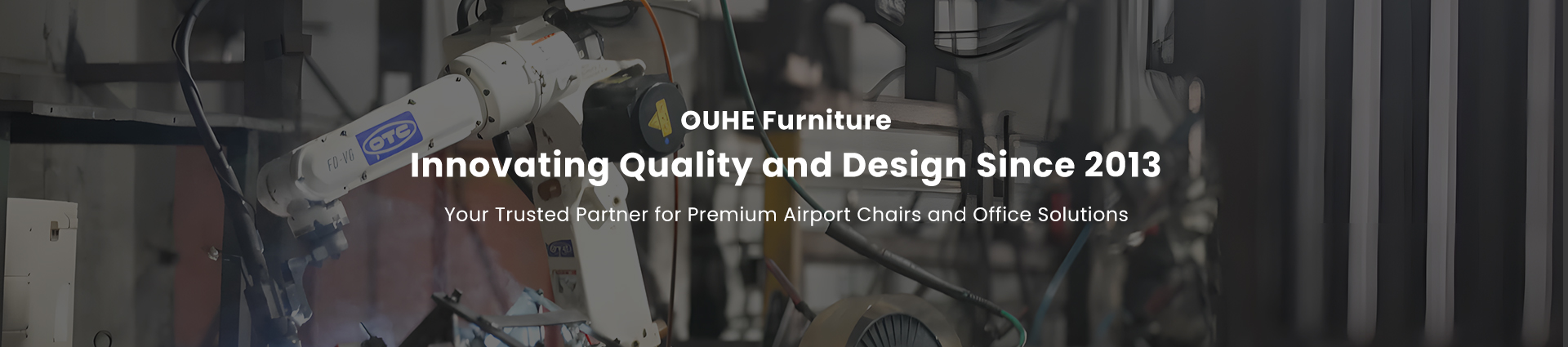
Our production base covers more than 50,000 square meters and includes seven specialized factories for metal stamping, robotic welding, powder coating, packaging and shipment, cartons, PU production, and sofas. Forty automatic robotic welding units support consistent waiting-chair manufacturing, while four high-speed backrest punching machines support efficient metal-panel production.
As a commercial waiting chair wholesale supplier, we can coordinate materials, seat quantities, arms, colors, beam length, surface treatment, upholstery, packaging, and project configurations. Our normal waiting-chair production capacity is stated at more than 5,000 sets per day, supporting both standard purchasing and large project schedules.
Selecting the Right Type
Beam seating is effective for orderly high-capacity areas. Individual chairs suit flexible reception layouts. Metal seating prioritizes cleaning and durability, while PU and upholstered chairs add cushioning. Lounge seating works best where comfort and atmosphere outweigh maximum seat density.
The strongest waiting-area plan often combines several types rather than using one chair throughout the entire building.