


Bleach Cleanable Chairs for Hospital Waiting Areas
Bleach cleanable chairs for hospital waiting areas must have materials and finishes verified for compatibility with specified bleach-based cleaning procedures. Buyers should evaluate chemical resistance, stainless steel grades, surface construction, and documented maintenance requirements.
What Are Bleach Cleanable Chairs for Hospital Waiting Areas?
Bleach cleanable chairs are healthcare or commercial seating products whose surfaces and components can tolerate specified bleach-based cleaning procedures without unacceptable deterioration.
The term is more specific than ordinary easy-clean furniture.
A chair with a smooth metal surface may be relatively easy to wipe, but this does not automatically mean that it can withstand repeated exposure to sodium hypochlorite solutions.
For hospital procurement teams, the distinction is important because cleaning requirements may involve different chemical concentrations, contact times, and repeated disinfection cycles.
As a hospital Waiting Chair manufacturer, our production covers stainless steel and PU waiting chair structures. The final material specification should always be evaluated against the actual cleaning chemicals required by the healthcare facility.
Why Do Hospital Waiting Areas Require Special Seating Materials?
Hospital waiting areas are shared environments used by patients, visitors, medical staff, and accompanying family members.
Seats are touched frequently, and their surfaces require regular cleaning as part of the facility's environmental hygiene procedures.
The furniture should therefore support practical cleaning and maintenance.
Several characteristics deserve attention.
Smooth and Accessible Surfaces
Surfaces with fewer difficult-to-reach areas can make routine wiping more manageable.
Suitable Material Compatibility
The seat surface, metal finish, and connected components should be compatible with the approved cleaning agents.
Appropriate Structural Design
The supporting structure should remain stable under repeated daily use.
Practical Maintenance
Facility teams should be able to inspect the seating and identify surface deterioration, loose connections, or damaged components.
Consistent Product Specifications
For hospitals purchasing multiple seating units, consistent dimensions and material specifications help simplify installation and maintenance.
Which Materials Are Commonly Used in Hospital Waiting Chairs?
Different materials provide different benefits and limitations in healthcare environments.
Stainless Steel
Stainless steel is frequently used in hospital waiting chairs because it provides a firm metallic surface that can be wiped using suitable cleaning products.
However, stainless steel grades differ in their corrosion resistance.
The selected grade, surface finish, welded areas, and cleaning chemical all influence its suitability.
Powder-Coated Steel
Powder-coated steel provides a protective finish and allows different color options.
Its chemical resistance depends on the coating formulation and curing process. Repeated exposure to strong cleaning solutions may affect certain coatings.
PU Seating
PU-covered seats provide cushioning and a relatively smooth contact surface.
However, PU formulations vary, so buyers should request material-specific cleaning instructions and chemical compatibility information.
Plastic Components
Plastic armrests, seat components, and covers may be used in some hospital seating designs.
Their resistance to bleach depends on the polymer type, additives, manufacturing process, and exposure conditions.
No single material should be described as universally bleach-proof without supporting evidence.
Is Stainless Steel Suitable for Hospital Waiting Areas?
Stainless steel can be a practical choice for hospital waiting chairs because it provides a smooth metal surface and does not rely on fabric upholstery.
It is also relatively straightforward to inspect for visible surface contamination or damage.
However, selecting the correct stainless steel grade is essential.
The corrosion resistance of stainless steel depends on its composition and environmental exposure. Chlorine-containing cleaning solutions can also affect certain grades, particularly when concentrations are high or residues remain on the surface.
Our SS203 Hospital waiting area chairs use 201 stainless steel for the backrest, seat, armrests, and legs, together with a 1.0 mm painted steel beam.
This provides a concrete example of the material construction used in commercial hospital seating.
The actual compatibility of this product with a hospital's bleach-based disinfectant should be confirmed separately through material testing and manufacturer documentation.
Further specifications are available on the Hospital Waiting Area Chairs product page.
Can Bleach Damage Hospital Waiting Chairs?
Yes. Bleach-based solutions containing sodium hypochlorite can damage certain metals, coatings, plastics, PU materials, and connected components under particular exposure conditions.
Potential problems include:
Corrosion or discoloration on susceptible metal surfaces.
Deterioration of protective coatings.
Changes in plastic surface properties.
Damage to adhesives and bonded connections.
Surface deterioration caused by repeated chemical exposure.
The actual risk depends on several factors:
Chemical Concentration
Higher concentrations may create greater material stress.
Contact Time
Longer exposure can increase the possibility of surface damage.
Cleaning Frequency
Repeated cleaning cycles may gradually affect materials and finishes.
Rinsing Requirements
Some surfaces require rinsing after disinfection to prevent chemical residue from remaining.
Material Composition
Different stainless steel grades, PU formulations, and coating systems respond differently to chemical exposure.
For this reason, hospital buyers should not rely on a general statement such as easy-clean when a project specifically requires bleach-compatible seating.
How Can Buyers Verify Bleach Compatibility?
A structured verification process helps prevent misunderstandings during commercial furniture procurement.
1. Identify the Approved Disinfectant
Confirm whether the hospital uses sodium hypochlorite or another chlorine-based cleaning solution.
2. Confirm the Required Concentration
The actual concentration should be documented rather than described simply as diluted bleach.
3. Define Contact Time
Specify how long the cleaning solution remains on the seating surface.
4. Confirm Rinsing and Drying Procedures
Some material combinations may require rinsing or drying after exposure.
5. Request Material Compatibility Documentation
Ask the manufacturer for relevant material information and chemical resistance test results.
6. Evaluate Repeated Exposure
A single cleaning test does not necessarily demonstrate suitability for repeated hospital cleaning cycles.
The complete seat surface, metal finish, and relevant connected components should be considered.
What Is the Difference Between Easy-Clean and Bleach-Cleanable Chairs?
These descriptions should not be treated as interchangeable.
Easy-clean chairs generally have surfaces that are convenient to wipe using compatible routine cleaning products.
Bleach-cleanable chairs require a more specific level of chemical compatibility.
The following distinction helps procurement teams define their requirements.
| Evaluation | Easy-Clean Chairs | Bleach-Cleanable Chairs |
|---|---|---|
| Main requirement | Convenient routine cleaning | Compatibility with specified bleach exposure |
| Surface design | Smooth and accessible | Smooth and chemically compatible |
| Cleaning products | Compatible routine cleaners | Specified bleach-based solutions |
| Chemical evidence | Material and maintenance information | Relevant compatibility testing |
| Procurement focus | Cleaning convenience | Chemical resistance and documented procedures |
A chair can be easy to clean without being suitable for repeated bleach disinfection.
This distinction should be included in the technical specification when purchasing hospital waiting room furniture.
How Should Hospital Waiting Chairs Be Cleaned?
Cleaning procedures should follow the hospital's approved environmental cleaning policy and the furniture manufacturer's instructions.
A typical process may include:
Removing visible dirt using an appropriate cleaning product.
Applying an approved disinfectant to the specified surface.
Maintaining the required disinfectant contact time.
Rinsing when required by the product or material instructions.
Allowing the surface to dry appropriately.
Checking for visible deterioration during routine maintenance.
The CDC recommends selecting cleaning and disinfection products that are appropriate for the surfaces being treated and following their instructions for use.
Bleach should never be mixed with ammonia, acids, or other cleaning products because dangerous gases may be released.
Relevant guidance is available from the CDC:
What Should Hospital Furniture Buyers Ask Manufacturers?
Healthcare procurement teams should prepare specific questions before approving a waiting chair.
Material Specifications
What materials are used for the seat, backrest, frame, armrests, and supporting beam?
Cleaning Compatibility
Which cleaning agents are compatible with each surface?
Bleach Testing
Has the complete product been evaluated against the required sodium hypochlorite concentration and contact time?
Repeated Cleaning
Are there test results covering repeated chemical exposure?
Maintenance Instructions
Can the manufacturer provide detailed cleaning and maintenance guidance?
Replacement Components
Can damaged seat panels, armrests, or other components be replaced individually?
These questions help distinguish ordinary commercial seating from products that have been evaluated for specific healthcare cleaning requirements.
How Does Manufacturing Quality Influence Hospital Seating?
Material selection is only one part of hospital waiting chair quality.
The manufacturing process also affects surface consistency, joint accessibility, structural stability, and the final assembly.
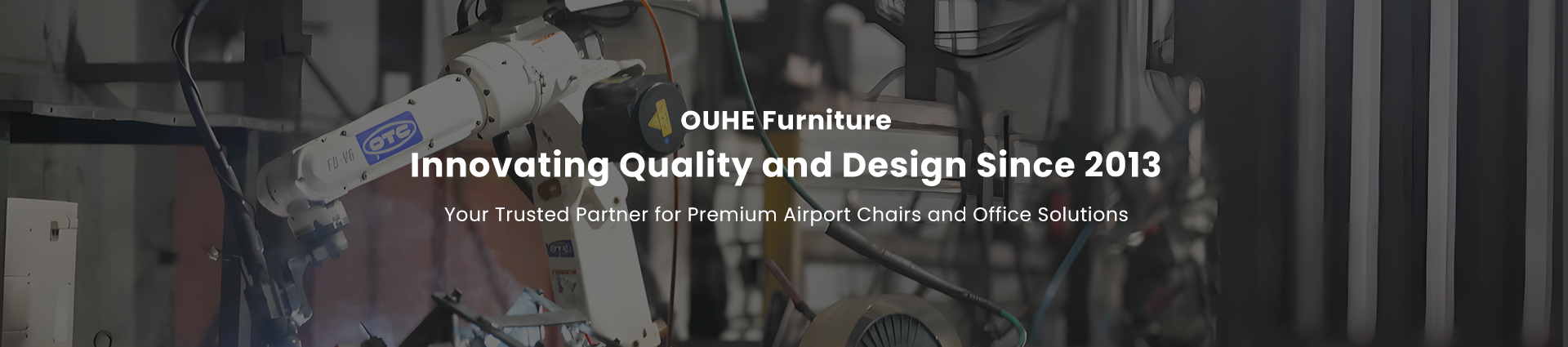
Our production facilities include metal stamping, robotic welding, hardware spraying, PU manufacturing, and packaging.
These integrated processes help coordinate different product components during production.
For hospital seating projects, particular attention should be given to:
Consistent stainless steel and steel specifications.
Accurate metal component dimensions.
Proper welding and joint finishing.
Uniform surface treatment.
Stable seat and beam connections.
Final assembly inspection.
Protective export packaging.
For larger projects, approved samples and documented specifications should be used as the reference for mass production.
Request Hospital Waiting Chair Specifications for Your Project
Bleach cleanability should be treated as a verifiable technical requirement rather than a general product description.
A suitable hospital waiting chair should combine practical seating design, stable metal construction, accessible surfaces, and compatibility with the healthcare facility's actual cleaning procedures.
Our team can discuss stainless steel waiting chairs, PU seating options, seat configurations, and material specifications for hospital furniture projects.
When requesting a quotation, please provide the required seat quantity, preferred material, disinfectant type, bleach concentration, contact time, and any relevant project specifications.
Submit these details through our Hospital Waiting Chair Inquiry Page to discuss suitable commercial seating and manufacturing arrangements.
Previous:
Next: 3 Seat Steel Chair